Introduction
Building wealth is a long-term endeavor, but managing investments does not have to be a full-time job. For many professionals, entrepreneurs, and CEOs, time is the scarcest resource. While they understand the importance of investing, they may not have the capacityóor desireóto actively monitor markets, rebalance portfolios, and analyze financial data on a daily basis.
This is where managed funds play a crucial role. Managed funds offer investors a way to participate in financial markets while delegating day-to-day decision-making to professional fund managers. When used appropriately, they provide diversification, structure, and disciplineóallowing investors to grow wealth without unnecessary complexity or stress.
This article explores managed funds from a strategic, business-minded perspective. We will examine how they work, why they appeal to long-term investors, their advantages and limitations, and how they can fit into a well-designed wealth strategy.
What Are Managed Funds?
Managed funds are investment vehicles where capital from multiple investors is pooled together and managed by professional investment managers according to a defined strategy. These strategies may focus on equities, bonds, real assets, or a combination of asset classes.
Each investor owns units or shares in the fund, representing a proportional interest in the underlying portfolio. The fund manager is responsible for security selection, asset allocation, risk management, and ongoing portfolio adjustments.
Managed funds come in many forms, including:
Equity funds
Fixed income funds
Balanced or multi-asset funds
Index-tracking funds
Actively managed specialty funds
Despite their differences, the core principle remains the same: investors outsource complexity in exchange for professional oversight.
Why Managed Funds Exist
Financial markets are increasingly complex. Globalization, technology, regulation, and market interconnectivity have raised the bar for effective investing.
Managed funds exist because:
Not all investors have the expertise to analyze markets
Diversification requires scale and access
Emotional decision-making often destroys returns
Time constraints limit active involvement
From a business perspective, managed funds are a form of specialization. Just as companies outsource non-core functions, investors outsource portfolio management to professionals whose sole focus is capital allocation.
Professional Management as a Strategic Advantage
One of the primary benefits of managed funds is access to professional expertise.
Fund managers typically operate within structured investment processes supported by research teams, data systems, and risk controls. They analyze macroeconomic trends, company fundamentals, valuations, and market sentiment.
For investors, this provides:
Consistent decision-making frameworks
Risk controls embedded in the process
Accountability through performance reporting
Continuity beyond individual market cycles
While no manager is infallible, professional discipline often outperforms ad-hoc decision-making driven by emotion or headlines.
Diversification without Complexity
Diversification is a cornerstone of sound investing, yet achieving it independently can be difficult and costly.
Managed funds simplify diversification by providing exposure to multiple securities, sectors, or regions within a single investment. This reduces the impact of any one position on overall portfolio performance.
Diversification benefits include:
Reduced volatility
Lower company-specific risk
Smoother long-term returns
For CEOs and business owners who already face concentrated risk in their operating businesses, diversification through managed funds can be especially valuable.
Time Efficiency and Focus
Time spent managing investments is time not spent building businesses, leading teams, or pursuing strategic opportunities.
Managed funds allow investors to remain engaged at a strategic levelóreviewing performance periodicallyówithout needing to manage tactical decisions.
This separation of roles mirrors effective corporate governance: investors set objectives, managers execute.
The result is clarity, focus, and reduced cognitive load.
Active vs Passive Managed Funds
Managed funds can broadly be categorized into active and passive strategies.
Active funds seek to outperform a benchmark through security selection and market timing. Passive funds aim to replicate the performance of an index with minimal intervention.
Each approach has merits:
Active funds may add value in inefficient markets
Passive funds offer low costs and transparency
A combination can balance cost and opportunity
The choice is not ideologicalóit is strategic. Investors should evaluate where active management has a realistic advantage and where efficiency favors passive exposure.
Understanding Fees and Costs
Managed funds charge fees for their services. These may include management fees, performance fees, and operating expenses.
Fees matter because they compound over time. Even small differences can materially affect long-term outcomes.
Investors should evaluate:
Fee structure transparency
Alignment of incentives
Net performance after fees
High fees are not inherently badóbut they must be justified by consistent value creation.
Risk Management Built In
Risk management is a defining feature of professionally managed funds.
Most funds operate under formal risk guidelines governing position sizes, asset allocation, liquidity, and exposure limits. Stress testing and scenario analysis are common tools.
This structure reduces the likelihood of catastrophic outcomes driven by overconfidence or concentration.
While losses cannot be eliminated, disciplined risk management improves long-term survival and consistency.
Liquidity and Accessibility
Managed funds are generally accessible to a wide range of investors and offer regular liquidity, allowing investors to add or withdraw capital based on their needs.
This flexibility is particularly useful for planning purposes, enabling alignment with cash flow requirements, business investments, or life events.
Liquidity terms vary by fund, making it important to understand redemption conditions before investing.
Behavioral Benefits: Removing Emotion
One of the most underappreciated advantages of managed funds is behavioral.
By delegating decisions to professionals, investors reduce the temptation to react emotionally to market volatility. Fear and greedócommon drivers of poor outcomesóare less likely to dominate.
Systems replace impulses. Process replaces panic.
Over time, this behavioral discipline can be as valuable as investment skill itself.
Managed Funds for Long-Term Wealth Building
Managed funds are best suited for long-term objectives rather than short-term speculation.
They work particularly well for:
Retirement planning
Intergenerational wealth transfer
Capital preservation with growth
Supplementing concentrated business risk
Consistency, patience, and alignment with goals are more important than short-term performance rankings.
Common Misconceptions
Despite their benefits, managed funds are often misunderstood.
Common misconceptions include:
All managed funds are expensive
Past performance guarantees future results
One fund fits all objectives
Active management always outperforms
In reality, outcomes depend on strategy selection, discipline, and alignment with investor needs.
Selecting the Right Managed Fund
Choosing a managed fund requires thoughtful evaluation.
Key considerations include:
Investment philosophy and process
Manager experience and stability
Risk profile and volatility
Fee structure and transparency
Consistency across market cycles
Investors should think like business owners, not speculators.
Portfolio Integration
Managed funds should not exist in isolation. They function best as part of a broader portfolio strategy.
Combining multiple funds with different objectives can create balance between growth, income, and stability.
Regular reviews ensure alignment as goals, markets, and personal circumstances evolve.
Limitations and Trade-Offs
Managed funds are not without limitations.
Investors sacrifice some control and customization. Performance may lag benchmarks during certain periods. Manager risk is real.
Understanding these trade-offs prevents unrealistic expectations and improves satisfaction.
The objective is suitability, not perfection.
Why Managed Funds Appeal to CEOs and Professionals
CEOs and senior professionals value efficiency, delegation, and systems.
Managed funds align naturally with this mindset by:
Reducing decision fatigue
Providing structured oversight
Allowing focus on core competencies
Supporting long-term planning
They transform investing from a tactical activity into a strategic function.
The Compounding Effect Over Time
When managed funds are held consistently, compounding works quietly in the background.
Reinvested income, disciplined rebalancing, and long-term exposure allow capital to grow steadily.
The key is staying invested through cycles, not chasing short-term performance.
Final Thoughts
Managed funds offer a practical solution for growing wealth without the headaches of constant decision-making.
They provide professional management, diversification, and behavioral disciplineókey ingredients for long-term success.
While not a substitute for financial literacy, managed funds allow investors to participate in markets with confidence and clarity.
In a world where attention is fragmented and complexity is rising, simplicity supported by expertise is a powerful advantage
Summary:
Managed funds are an easy way to invest wisely and with low risk. Investment in a fixed term deposit — especially with a fund that invests in real estate — is an easy way to grow to your wealth. Read more about securing your financial future.
Keywords:
Managed funds,term deposit rate,fixed term deposits,retirement funds,real estate investment
Article Body:
Managed funds are an easy way to invest wisely and with low risk. Investment in a fixed term deposit ñ especially with a fund that invests in real estate ñ is an easy way to grow to your wealth.
Apart from being a great way to have your money managed by investment professionals, managed funds also simplify the process of building and maintaining an investment portfolio. Instead of tracking a wide range of individual investments, your fund will keep track for you, and the progress of your investment is expressed in one simple unit price.
<b>A Bit Here and a Bit There</b>
With any investment strategy diversification is important to minimise risk. The resources available to financial institutions are usually greater than those of the individual investor, therefore diversification is much easier as part of a managed fund than it would be if you had to raise the capital for a truly diverse ñ and therefore more secure ñ investment yourself.
As an example, if you have $100,000 to invest and you choose to buy real estate, your $100,000 might buy you a small unit that you could rent out. Then your entire financial future hangs on the performance of this one investment. If houses in that area depreciate due to changes in the locale, or you have trouble finding or keeping tenants, or you find out three weeks too late that there are serious structural problems, your financial future is in jeopardy.
By comparison, a managed fund that invests in mortgages has the capital to speculate on a wide range of properties in diverse suburbs, with differing land values, various land uses (residential, commercial etc), and a much lower dependence on the performance of any single investment property. Your future no longer hinges on one little unit because itís merely a part of a much larger portfolio than you could invest in on your own.
<b>Choosing a Managed Fund</b>
When youíre choosing a managed fund itís always tempting to just go with the one that offers the best term deposit rate. However, experience dictates that itís wiser to conduct some deeper research before committing yourself to a fund. Here are some issues to consider:
<b><i>The decision-makers</b></i>: What qualifications do the Directors of the fund have? How closely are they involved in the day-to-day running and major investment decisions of the fund? Any managed fund that you invest in should be run by industry professionals ñ accountants, brokers, people with backgrounds in banking and finance; if youíre investing in a managed fund that invests heavily in property, the decision-making team should include someone with extensive experience in the real estate market.
<b><i>Mortgage funds ñ choosing properties and quality mortgages:</b></i> Mortgages are very popular investments for managed funds. As mentioned above, any fund that invests in property should have ready access to advice from a real estate market professional.
Consider factors such as the diversification of the properties invested in (geographical diversification ñ are the properties spread throughout a wide range of suburbs and price brackets? And sector diversification ñ what property types are invested in, spread across residential, commercial, industrial etc); and what percentage of the value of the property the fund will lend (often 70% of the value for first mortgages, and up to 85% of the value of the property for second mortgages).
A good way to gauge the viability of a managed mortgage fund is to look at the number of loan write-offs; the number of bad debts incurred (mortgages that the fund has granted that have been defaulted on); and the amount of loans in arrears of principal and interest for over 30 days.
Also, every property that is invested in should be valued by a qualified valuer ñ not a real estate ëmarket appraisalí ñ and, if possible (especially for smaller funds), every proposed property should be inspected by a qualified employee from your fund to double check that everything is as it should be ñ good quality control can prevent mishaps.
<b><i>Income options:</b></i> Naturally, itís your choice how long you wish to invest your money for. When choosing a fund look at factors such as early withdrawal penalties and payment options. Can you have access to the interest earned monthly? Quarterly? Annually? Or will you have to wait until the end of your fixed term period before earning any income from your investment? Choose whichever option suits you best. A high rate of return is useless if you envisage needing an income from your investment before the end of the proposed fixed term.
<b><i>Environment:</b></i> Economic trends and possible political changes are some other factors to keep a weather eye out for. If you invest heavily in a fund that in turn invests internationally, youíll want to know where your money is going and whether the governments and economies in question are stable and likely to stay that way. Some financial advisors suggest that investing 15-20% of your capital overseas is a wise move, and it is ñ as long as the country/countries in question have a good economic climate and arenít in the throws of political upheavals.
So, now you have a few tips for finding yourself a managed fund that will help to grow your wealth. Once youíve chosen a fund, or have decided on the sorts of investments that youíd like to be involved with and youíre looking for a fund, there are still some more things to consider before diving in.
This is the first instalment of a four-part series of articles to help you cut through some of the financial jargon without getting too much of a headache. The next three instalments will look at investment rates, retirement funds and self-managed superannuation. Hopefully theyíll help put you on the right track to grow your wealth.
A final note: This article ñ and the series of articles to come ñ is not given as professional financial advice. Your personal circumstances have not been taken into account and financial situations vary the world over. You should seek professional financial advice and read the product disclosure statement for any financial product before making a decision.
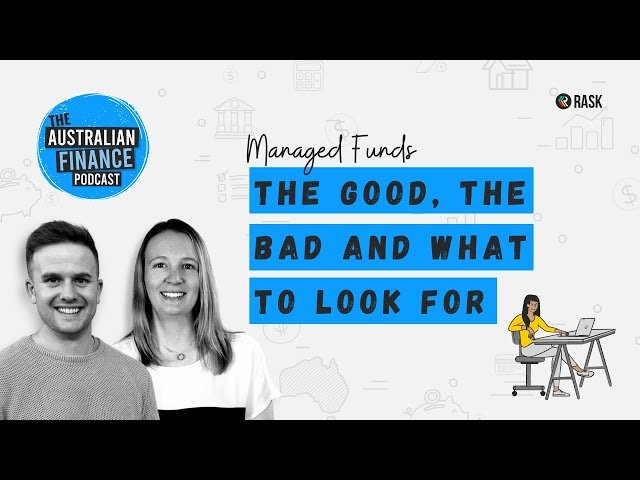
Managed Funds ó Growing Your Wealth without the Headaches
•


Tinggalkan Balasan